Wednesday, July 13, 2011

What's been happening at Vella Gardens?


       The shasta daisies and day lillies are in full bloom! (Yippee)

     The rows of delicious salad greens are filling in. (Wahoooo)

    The pumpkin plants are loving life. (hells yeah!)

    We are harvesting and hanging lavender bundles. (ahhhhhh)
                                
 Organic herbs (Oregano, thyme and peppermint) are being potted for wholesale. (Whoop whoop)


   And the Art and Earth Wellness Studio- a space for massge therapy, bodywork and natural health is slowly but surely being created!!!! (Ommmmmm)

  http://www.rtalierciomassagetherapy.com/


Sunday, June 26, 2011

Sunday Night Jam Session

 Making jam is a fantastic way to preserve your summer harvest for the bleak winter months. I've been picking strawberries and blackberries from the garden and decided to turn them into jam. Sunday night at 9 pm- perfect time for a berry jam session. Obviously. Here's how.

YOU NEED:
- 5 Cups of mashed berries- so about 7 or 8 cups of whole berries
- 8 Canning jars (with two part lids)
- Canning pot
- 7 cups of Sugar
- 1 box of Pectin
- Metal tongs or canning tongs.
- Jam music!


1) Gather your berries. You'll need 5 cups of mashed berries to make jam, so thats about 7 or 8 cups of whole berries. In my case, I used a combination of garden-grown strawberries and blackberries- and since I was short about a cup I ran out and bought a pint of local, organic strawberries to make up the difference.

2) Put your Pandora station on Grateful Dead radio, or another appropriate jam session station. Hopefully your first song is a live version of Shakedown Street by Phil Lesh, because that song kicks ass and has a great berry mashing beat. Seriously.

3) Fill a canning pot about half -way with water and bring it to a simmer. You'll need this hot water bath for the very end of the jam session.


4) Wash out the jam jars. Unscrew the lids and wash the jars and lid rings with soap and hot water. Place on a clean surface to dry. Take the lid caps, put in a saucepan and pour boiling water over them. Let them hang out in the hot water until you need them.


5) Mash you berries. A potato masher will suffice. I used some strange ladle-like device because I couldn't find my potato masher. You can also use a food processor but DON'T puree. There should be plenty of berry pieces in your berry mash.

6) Measure out 7 cups of sugar and put aside. I know, 7 cups of sugar is kind of gross, but you need this exact sugar - fruit - pectin ratio to ensure that the jam sets safely.

7) Put 5 cups of mashed berries into a saucepot. Make sure the measurement is exact. Start heating on medium heat.


8) Add one box of pectin and start stirring. Stir until the mixture reaches a rolling boil. A rolling boil is a boil that can't be stirred down.


9) Quickly add the sugar. Keep stirring continuously until the mixture again reaches a rolling boil. Once it does, stir for one more minute and then remove from heat.

(Things start to get a little hectic at this point. The background jam music is crucial here to keep you moving.)

10) Ladle the jam into the jars, filling until about 1/8 inch below the top. Wipe off any jam that might have dripped onto the top of the jar and then put on the lids, turning tightly.

11) Using your tongs, lower the jars into the canning pot full of simmering water. All the jars need to be covered by at least 1 - 2 inches of water, so if there isn't enough, add boiling water to the pot.

12) Bring to a gentle boil and keep the jars in the pot for ten minutes.

13) Remove the jars from the pot and place upright on a towel to cool.


14) After the jars have cooled, check each lid by pushing on the center. If the lids pop back at your touch, the jar has to be refridgerated- it hasn't set correctly. Otherwise, you are safe to keep your homemade jam on a shelf until you are ready to eat it. The National Center For Home Food Preservation recommends using the jams within a year.

15) Scrap the bottom of the saucepot for the jam remanents and put on a piece of toast. Rouse your roommate who is resting nicely in her bed and make her try your AMAZING BERRY JAM!!!!


It Takes a Village to Start an Urban Farm.

    The to-do list for opening Vella Gardens seem endless- starting a nursery/urban farm/retail space/center of creativity and wellness and all things Mother Earth is no small task. But for now, even though it's late in the farming season, I've been focusing on cleaning up the outdoor space and turning it into the urban farm I've been dreaming of for years.

I'm trying to grow on land that used to host a greenhouse- its a long rectangle plot enclosed by an old foundation on one side, a chain-linked fence on the other and a wooden gate at its entranceway. After the greenhouse roof was dismantled about 50 years ago, the lot remained empty until quite recently, when the last business owner at 1 Alfred Stone Rd. turned it into an outdoor retail space for her perennials and annuals. She cleaned up the lot and erected a beautiful, wooden pergola.

                                         The space when I first saw it, abandoned for several years.

                                          I, however, want to take things one step further.

 When I first saw the space, I immediately envisioned reclaiming the land and using it to GROW. I envisioned rows of perennial flowers blossoming a rainbow of colors. I saw pumpkin vines and oregano leaves and hardy kiwi fruit vines growing up the peregola. I saw rows of lavender, mint, thyme and chives. I envisioned a space in the center of the lot, underneath the pergola, for sitting in meditation, for listening to live music or for guest speakers to come and share their wisdom.

And so, I got to work. Weeding. Before I could even begin to map out my vision, I needed to weed. But as I started digging in the dirt I began finding shards of glass everywhere. I mean, e.v.e.r.y.w.h.e.r.e. Reminents of the old greenhouse roof.

               I realized 1) Urban farming is not for sissies. 2) I needed raised beds. 3) I needed help.

                                                   Buckets full of glass I've picked up from the land. 


 I quickly enlisted the help of my family and friends and scheduled a family work day. My brother and Dad came to use their technical brains to engineer several raised beds for planting my vegetables and greens.


  My mother wasted no time, putting her amazing cleaning abilities to work weeding the gardens and giving the store a good scrub down (my mother is able to see dirt particles not visible to the human eye). She even got her hands on a wheel barrow.

                                         
My best bud Charlene and my roommate Katie arrived to help haul and spread a dump truck full of soil/manure delivered by Al. Because it's late June, this was my last chance to put in a pumpkin patch. Katie was especcially skilled with shaping the dirt into even beds for the pumpkins.


And my boyfriend, the talented Chef Jason Armitage, came over for a few hours on his day off to show us all up with his wheel barrow/dirt moving skills.


By the end of a very long day, we were exhuasted, filthy and smiling. Our bodies ached but we were filled with the great satisfaction that comes from a day of good, solid, productive, hardwork. We had succesfully created beds for a beautiful pumpkin patch, wooden frames were erected for vegetables and herbs, and we cleaned out a dump truck full of weeds and debris from the plot. Things were shaping up.

                            The back of the space was cleaned up and turned into rows of beds for a pumpkin patch.

I'm realizing how much community is linked with farming. From the farmer who delivers compost made by local cows, to the friends and family who pitch in their man/woman power, to the neighbors and passerbys who stop by to offer support and advice. And of course the local people and restaurants who recognize the importance of eating locally grown food and whose support makes the whole thing possible. Yes, it definitely takes a village. And It's suprising, but people jump at the opportunity to volunteer their time to garden or farm, probably because getting to spend a day outside with a group of happy people and using our bodies in a productive way is a treat in this modern world. And that's a good thing for me- because growing food is not something that I could easily do alone.


    My goal is to run Vella Gardens as a small CSA next season, offering vegetables, herbs and perennial flowers. If you are interested in learning more about buying a share next season please contact me at: rvellladesign@gmail.com


Wednesday, June 15, 2011

Local Herb of the Week

"Local herbs are not ten times stronger, not a hundred times stronger. Local herbs are a thousand times stronger than exotic ones!!" - J.R. Worlsey, the great English Acupuncturist

         I just typed the title of this article and had flashbacks. When I was in college, a fellow classmate would post a short excerpt every week on his AIM away message (this was pre-facebook posting) entitled "Herb of the Week". This excerpt, seen by the majority of Stonehill College's class of 2005,  included several prolific sentences publicly announcing the individual responsible for the most moronic (and usually drunken) behavior of the weekend. In case any of you are confused, I'll now reference the urban dictionary: ( Herb: Insult synonomous with loser but can have multiple negative connotations. Pronounced "HURB" with no silent 'h.) Go college. So classy.

  Luckily my college days are behind me and my weekly herb encounters are now solely isolated to plant cultivation. I totally love herbs- growing them, harvesting them, cooking with them, using them medicinally. Herbs are totally badass. Here is one of my most favorite herbs that grows easily and abundant, locally.

                        LEMON BALM: Melissa Officinalis

Although Native to Southern Europe, Lemon balm is very easy to grow and proliferates easily in our New England climate. Evidence of its medicinal use goes back to ancient Greek where it was used against scorpion bites and insect stings. It was also revered by ancient bee-keepers who would rub crushed lemon balm leaves on their hives to encourage the bees to return back home. In fact, it's name Melissa, comes from the Greek word for honey bee.

I find Melissa to be extremely soothing, cooling and cleansing. When I am feeling nervous or anxious, I will boil water and steep lemon balm leaves to make a calming, hot tea. On a hot summer day, I find iced lemon balm tea totally cooling and refreshing. Seriously, I love this stuff.

                      The Rodale Herb Book gives a quick and easy recipe for balm-honey tea, which is used for longevity and to cool patients with fevers:

                                                     1) Pour one Pint of boiling water over one ounce of lemon balm
                                                     2) Let the herb infuse in the hot water for 15 min
                                                     3) Strain the infusion to remove the herbs
                                                     4) Add honey or lemon peel to taste
                                                     5) Drink the tea and live foreverrrrrrr

               I would suspect that lemon balm liqueur (!!!!) is even better than lemon balm water, no? And I would also suspect that it's benefits include not only longevitiy, but other super human powers such as the ability to feel zero pain when walking into a glass sliding door or to magically morph the below-average man sitting at the bar into a ten +. I'll have to give it a try and get back to you.  But in the meantime, here's that recipe, too.

                                                   1) Crush a handful of lemon balm leaves
                                                   2) Add one pint of Brandy
                                                   3) Let the mixture steep for 24 hours and then strain
                                                   4) Add 1/2 cup of honey syrup (see below)
 (to make honey syrup- use equal amounts of  water and honey. Boil the water for a few minutes, remove from the heat, and then add honey.)
                                                   5) Drink and be super merry

   Yes, lemon balm is a total keeper- in addition to teas and cocktails, you can also add it to your favorite salad or fruit salad for some subtle, extra flavor. Give it a whirl AND stayed tuned for next week's local herb of the week.

The greenhouses at Vella Gardens will be growing and selling organically cultivated herbs (potted and cut) starting in fall 2011. Please contact me at rvelladesign@gmail.com for more information!!!!


Sunday, May 29, 2011

My Secret Garden

     
     The instant I saw the beautiful greenhouse, cottage and gardens at 1 Alfred Stone Rd. my purpose became clear: clean-up this deserted garden space and turn it into an urban vegetable and perennial flower farm. Get the greenhouse functioning, growing annuals and perennials, and turn the beautiful cottage space into a store to sell locally grown products and to hold classes and workshops on environmental stewardship and natural health. If there was ever a place to combine my passions of gardening, environmental stewardship, creativity and natural health, this was it. But today, as I hesitantly opened the old wooden gate and stood staring at the over-run gardens, I felt sheer panic creeping in. My mission was clear, but the task seemed impossible.


I took a few breaths and began to look around. My panic was soon lessened by the joy of seeing some familiar friends. The feathery fronds of two astillbe plants were creeping out from behind some dead branches and a giant bed of lovely chives displayed their purple spring blossoms.

I went over to explore and soon found myself ripping back plastic tarps, pulling out giant weeds, pulling back dead branches and discovering a world of treasures hidden beneath the mess. I started seeing magic everywhere- hidden in every corner of the space.

A spectacular varigated clematis, hiding between dead twigs but still managing to twirl up the wooden pergola to share its brilliant Spring beauty.

A sea of purple- allium, corn flower, and nepita- carrying on a perfect Spring performance despite their neglect.


A sweet baptisia managing to remain strong and beautiful despite a strangling, weedy vine.


My excitement grew as I continued to explore; I felt the magic of my secret garden. I even found the lemony, calming goodness of my favorite herb, melissa officinalis (lemon balm), growing up through a hole in one of the plastic tarps.


With each weed I pulled,  my determination to build my dream business from this magical and vibrant space grew sronger. And while the challenge looms large ahead, today I was reminded that the impossible becomes possible when you slow down, look around and get. to. work.


Stay tuned as the season progresses for more information on Vella Gardens, opening at 1 Alfred Stone Rd., Pawtucket RI.

Thursday, December 30, 2010

Adventures in Urban Composting.

     Each time I try and sneak an apple core into my trash bin, the haunting words of Farmer David Brown echo through my brain: Don't call yourself an environmentalist if you don't compost.

At the time, I was a farm apprentice at Hay House Farm, a small, sustainable farm on the Connecticut shoreline. As farm apprentice, part of my reponsibility was to make sure every single shred of organic waste ended up as compost; compost was an integral part of creating the healthy and abundant vegetables and flowers that we sold at the farmer's market weekly.

Each morning I woud set out with a cart full of compost materials: food scraps from our delicious meals, the leftovers from restaurant kitchen scraps used to feed the chickens, hair cut remains from one of the adorable Lhasa apso dogs that followed us around the farm. I would haul the materials to one of the chicken coops and, amidst a flurry of squacking hens, dig a sizeable hole in the dirt floor of the coop, burying it all. A few weeks later, when I went to turn and aerate the chicken coop floor, I would be amazed to find the majority of my piles aleady decomposed. Periodically throughout the season, we would dig out the chicken coops and add to the large piles of compost that we used to feed the gardens. This was my first lesson in the cyclical beauty of composting.

So, what exactly is composting? Put simply, composting is the decomposition of organic material; when we gather our carbon and nitrogen filled organic waste- kitchen scraps, leaves, grass etc.- and create an ideal environment for decomposition, tiny microorganisms feed on the waste and break it down into its simpliest parts. The product is a fiber-rich hummus, filled with inorganic nutrients (nitrogen, phosphorus, potassium) that is perfect for feeding vegetable and flower gardens. For us crazy gardeners, compost is like gold.

The microorganisms responsible for this amazing alchemy have a few requirements. First of all, because they break material down through aerobic respiration (are you having flashbacks to highschool biology?) they require adequate amounts of oxygen. Turning the compost pile regularly is enough to give the little buggers plenty of 02. Without oxygen, the decomposition process turns anaerobic, otherwise known as fermentation (think swamp). If your compost pile begins to reek, you probably aren't turning your pile enough. A well aerated compost pile does not smell!!!

A successful compost pile also needs adequate water (but not too much!) and the proper ratio of carbon to nitrogen. Compostable materials are divided into two categories, green materials and brown materials. Green compost materials (kitchen scraps, grass clippings, dead house plants) are high in nitrogen whereas brown compost materials (dried leaves, twigs, pine needles) are high in carbon. The organisms that decompose organic material use carbon for energy and nitrogen to produce new cells at a ratio of about 30 C to 1 N. Too much green materials in your compost pile, and the organisms emit excess nitrogen as stinky ammonia, or NH3. Too much carbon-filled brown compost, and the decomposition process slows drastically, as the organisms do not have adequate nitrogen to grow their colony.

So, why should you give a shit if you aren't growing anything? Composting isn't only for gardeners and farmers. Anyone who cares about the earth should be educated about the environmental benefits of composting their organic waste. Currently, at least 25% of our landfills are comprised of food waste and yard waste. Because of the lack of oxygen in a landfill, the decomposition of organic material becomes anaerobic. This means that large amounts of methane gas (CH4), a greenhouse gas that, according to the EPA, is "over 20 times more effective at trapping heat in the atmosphere than carbon dioxide", is emitted into the atmosphere due to organic waste being thrown into landfills. Not great. And although trapping methane gas from landfills to use as energy is the newest craze, i personally think that keeping food and yard waste out of landfills and using it to make rich soil that can replenish the earth seems a tad more sane. But that's just me.

Check out the EPA's website http://www.epa.gov/osw/conserve/rrr/composting/benefits.htmers for more reasons to compost.
---------------------------------------------------------------------------------------------------------------------


So, just when I was feeling pretty smug about my self-proclaimed environmentalist status, my idealic days at Hay House Farm came to an end and I moved to Boston. It was time to see what I was really made of; my adventures in urban composting began.

Over the past 5 years of urban living, I have tried it all. When I initially moved to Boston, I worked as a professional landscaper. I brought my compost to work in a tuberware and tossed it into the piles of yardwaste that we composted at a local farm. I'll admit it- kind of ridiculous. When I moved to Cambridge and left my landscaping job, I attempted to use a shoddy compost bin in my backyard. My landlord was quick to veto that idea; I didn't really blame him.


I soon discovered the Cambridge 'food scraps drop-off' initiative. I'd bring my kitchen scraps in a bucket during the drop-off hours and I could sleep easy knowing that they were not sitting in a landfill turning to methane. Phew. And now, living in Providence I am lucky to be only blocks away from Whole Foods, where a nice compost bin stands at the entrance awaiting me and my smelly compost.  Whole Foods has made considerable efforts to compost nationwide- check it out:

                              http://blog.wholefoodsmarket.com/2009/01/composting/

Starting my own gardening business has brought on the additional responsibility of composting yard waste at a larger scale. One day, I hope to run a small, sustainable farm- much like Hay House- where i can compost on premises and use that to feed the many garden's I care for. But for now, running my small business quite unglamorously out of my urban apartment means paying someone else to take my yard waste, letting them turn it into compost, and then buying it back later on to then feed a client's garden. Only in the city. On a more positive note, several of my more rurally located clients decided to start their own composting efforts in their backyards; nothing makes me happier than passing the torch of environmental stewardship.  

So, do I compost every single shred of organic remains that crosses the threshhold of my apartment? Not exactly. But I do make a conscious decision to do the best I can and, for the most part, my rotten leftovers and banana peels end up as compost feeding someone's garden. So, until the day that I'm out of the city and can easily walk out my backdoor to compost, I just remember that every tiny effort to be environmentally conscious, as tedious and smelly as it may be, is an act of gratitude and respect for our lovely momma earth.


Dropping of landscape waste to be composted at a small farm in Weston, MA


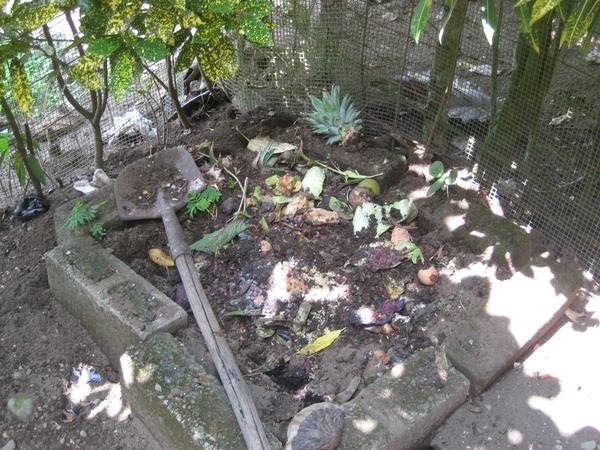
 Compost pile behind my humble abode in Costa Rica.


Lovely compost bins at Whole Foods make life for the urban composter a little easier.

Wednesday, September 1, 2010

Why Do I Garden?

     I always worshipped nature, but certainly was not always a gardener. It always felt good to have my hands covered in dirt, but it was many years until I came to fully understand the innate, creative power contained in the rich soil between my fingers.

Besides from a few vegetable plants and the much loved house- plants in my home growing up, my passion for gardening went largely undiscovered until my early twenties, during the time I refer to lovingly as my spiritual crisis.

Immediately after college, my interest in holistic health, a deep longing for personal/spiritual growth and some much appreciated divine intervention, led me to Portland, Oregon and the National College of Naturopathic Medicine. I enrolled in a four-year, Masters of Science program in Chinese Medicine. I found myself swirling and spinning in the knowledge of the ancient Daoists, learning a medicine and way of being that was based largely on living in accordance with nature. I dove head first into a path of inner cultivation, personal healing and self-growth. With everything I thought I knew challenged, I struggled to assimiliate into my being this new way of understanding myself and my world.

And then it hit me. My spiritual crisis. As anyone dedicated  to conscious living understands, growth isn't always pretty. 

As I began to shed layers of old patterns, stale thinking, and limiting beliefs, I exposed parts of myself that prefered to remain hidden. Long neglected physical and emotional injuries, years of body image and food related issues, unfelt emotions. All bubbling to the surface, wanting love and attention, refusing to be numbed anymore. And while I continued to sit everyday in class, my head filling with more and more amazing knowledge, all I really wanted was to stop thinking. All I really needed was to get out of my head and into my body. Into my heart. I knew that the only way I could become the effective holistic healer that my long and expensive education was gearing me towards was to first take time to love and heal myself.

Not suprisingly, I was craving the feeling of physical, outdoor work. Having been in school for the past 18 years, I wanted time to reconnect with the non-cerebral parts of myself. I wanted to completely understand the Daoist teachings. It wasn't enough to read that certain organ systems corresponded energetically to different seasons; I wanted to viscerally experience these energies. I did not want to think, I wanted to really know.

Several months later, after much agonizing soul searching, I found myself, clad in work boots and overalls, surrounded by the beautiful gardens of Hay House Farm in Old Saybrook, Connecticut. I had been hired by the amazing artist and farmer David Brown, to be his seasonal garden apprentice for the next nine months. That was just the beginning...

So why do I garden? I garden because with every seed I plant, with every plant I love, with every banana peel I dump into my compost pile, I am paying hommage to this earth. I garden because it keeps me healthy and strong and allows me to love and respect my body in a way that no other form of physical excercise does. I garden because the brilliance of a summer perennial garden can keep me inspired for days. I garden because growing my own food has taught me to honor my meals as sacred nourishment, and not just calories to be calculated. I garden professionally because I so desperately want to share the full, feathery beauty of a peony or the pure amazingness of a cucumber dangling from its delicate, prickly vine.

And there are times when I feel lost. Questioning, seeking and aching. So, I garden because I don't know what else to do.

                                                            I heal myself with my gardens.